Our Team And History
Western Bay Wildlife Trust (WBWT) was founded in 2014 following the 2011 MV Rena oil spill near Mount Maunganui. Founding trustees joined forces to monitor and study how wildlife populations would recover from such a natural disaster and aspired to raise awareness of threats to local wildlife and improve conservation management of key taonga species.
Today, our mission remains the same: "To protect native seabird and shorebird populations, enrich their habitats and inspire community connection to ensure our taonga species are protected for future generations"
Our History
Part 1: The Beginning
Before starting WBWT, the founding trustees had been working independently from one another for many years, helping a range of species, including little blue penguins (Kororā), sharks, grey-faced petrels (Ōi) and carrying out pest animal control.
Part 2: The Calling
When the cargo ship MV RENA ran aground on the 5th of October 2011, they came together to help recover the oiled wildlife. The heart-wrenching process and subsequent monitoring for Massey University sparked the formation of the trust.
Part 3: The Responsibility
In 2015, The Ornithological Society of New Zealand transferred its grey-faced petrel handling permit to the trust to continue its vital work. In 2017, the trust was issued a long-term wildlife authority by the Department of Conservation to monitor little blue penguin population trends and continue undertaking rescues. This enabled us to begin the ongoing little blue penguin project to understand population trends and key threats. In 2021, the Shorebird Minders programme was launched to help monitor and protect breeding shorebirds on Mount Maunganui's Main Beach. In 2022, WBWT was granted a long-term mortality permit to understand the cause of death in seabirds and shorebirds from the Western Bay of Plenty.
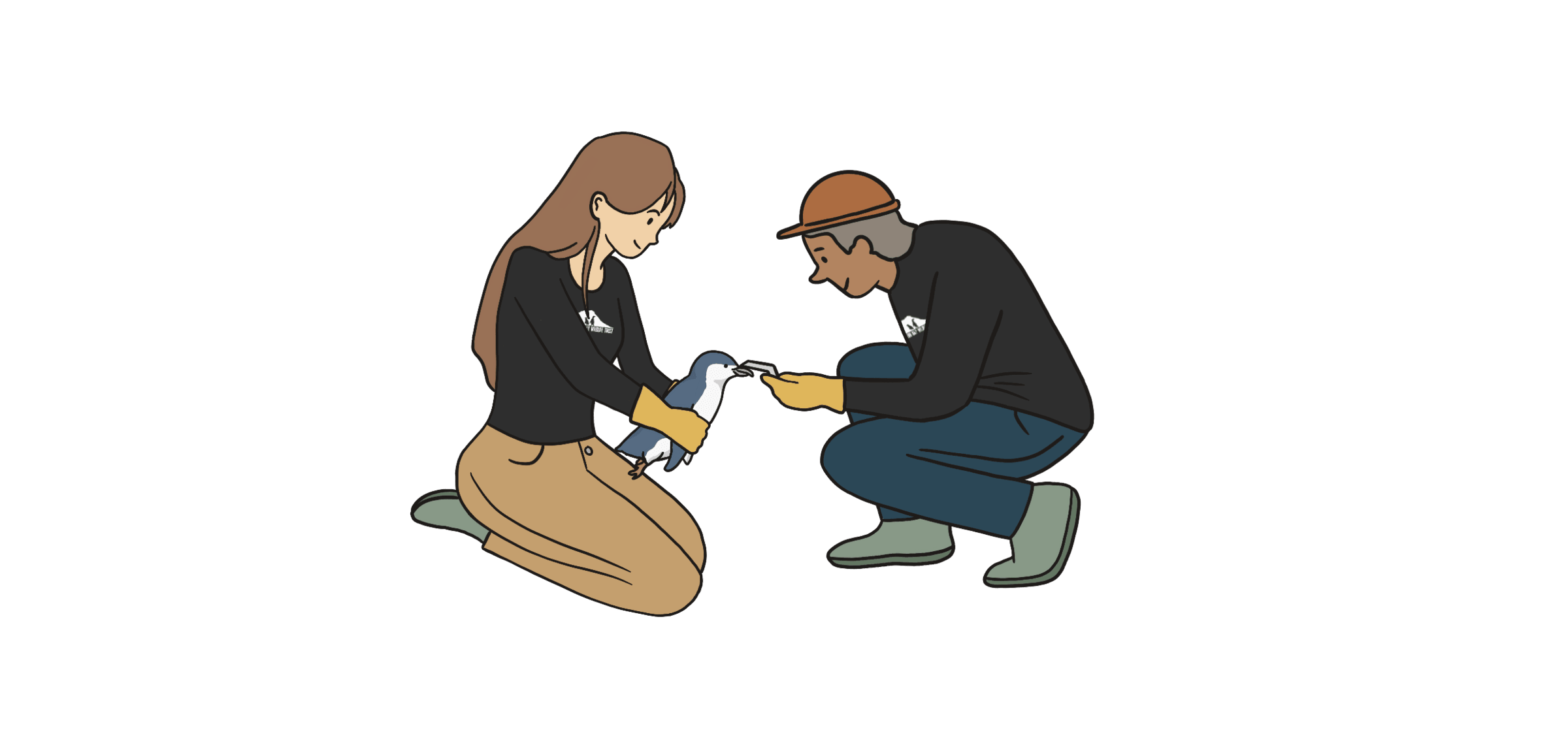
As part of our ongoing commitment to our taonga, we provide a freephone rescue hotline 0800 Sick Penguin (0800 742 573) for any penguins found in distress.
Since we started operating as WBWT, habitats have been restored, enhanced and enriched to ensure they are safe for our wildlife to live out their lives alongside a large urban population.
Our Team
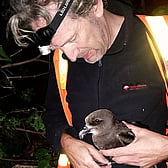
Trustee - Paul Cuming
Paul comes from a background of seabird research. In his spare time, he has spent a little under 30 years studying the Grey-faced Petrel/Oi on Mauao. His other skills pertaining to all birds are identification, handling, capturing, measuring, banding [ringing], and identifying their songs.
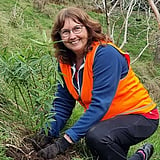
Trustee - Vicki Woodcraft
A lifelong resident of Mount Maunganui, Vicki’s interest in conservation grew after working at the Rena Wildlife Rescue Centre, leading her to volunteer for WBWT. Vicki recently completed a Bachelor of Science in Ecology & Biodiversity to expand her environmental knowledge. She is now a dedicated shorebird minder and assists with kororā rescue and rehabilitation.
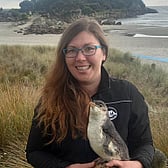
Trustee - Anna Wentsch
Anna started volunteering with WBWT in 2019 (on the kororā team) and joined the board as a trustee in 2021. She has a diverse background in conservation, which includes threatened species management, habitat restoration, and pest animal control. Anna is our Kororā and Shorebird Minder project lead and plays a key role in day to day operations.
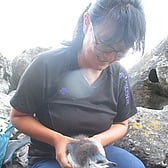
Trustee - Satsuki Takenouchi
Growing up in Japan, she has seen and experienced the impact of humans on the the natural environment. She soon developed a passion to help save the environment for future generations, which lead her to complete the Bachelor of Applied Science in Environmental Management at AUT. Satsuki joined the WBWT team following the Rena Oil Spill and has been a key monitoring team member ever since!
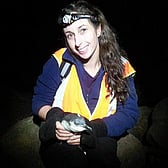
Advisor - Melissa McLuskie
Melissa has a diverse wildlife, animal husbandry and biodiversity management background. She began her journey of protecting kororā/little penguins in 2014 with the Western Bay Wildlife Trust team. She now leads the National Monitoring Programme for the New Zealand Penguin Initiative and works with a range of community groups to improve conservation outcomes for penguins and their habitats across the country.
Find out more about our work
Want to lend a helping hand?
Our Supporters