Spotted a Sick or Injured Penguin?
We run a Kororā (Little Blue Penguin) rescue hotline and rehabilitation programme for the Western Bay of Plenty.
If you find a Kororā (Little Blue Penguin) out in the open during daylight hours, it is likely in distress, starving, sick or injured - and in need of help.
Acting quickly can make a significant difference to the Kororā's survival. Without rescue, sick, injured and starving kororā are likely to die, and they’re at serious risk of predation & dog attacks.
Do not touch the kororā due to HPAI (also referred to as bird flu) risk.
Know when to report to MPI instead (bird Flu):
If you see 3 or more sick or dead wild birds in a group, report it immediately to the MPI exotic pest and disease hotline on 0800 80 99 66.
Important First Steps:
Keep people and dogs away to minimise stress to the bird.
Call us on 0800 SICK PENGUIN (0800 742 573).
Stay calm and quiet, share your exact location over the phone, and follow all further instructions.
If you cannot reach us, call ARRC Wildlife Vets (07-579-9115).
If you cannot reach ARRC or you’re located outside the Western Bay of Plenty, call the Department of Conservation on 0800 DOC HOT (0800-362-468).
NEVER attempt to feed or give water to Kororā as it can cause further damage or kill the bird.
Only handle Kororā if instructed over the phone. Kororā have sharp beaks and claws and may bite when picked up. Their flippers are also very strong and may flap. They may also carry zoonotic diseases, such as HPAI (bird flu).
For more detailed info, please see below.
What to look out for
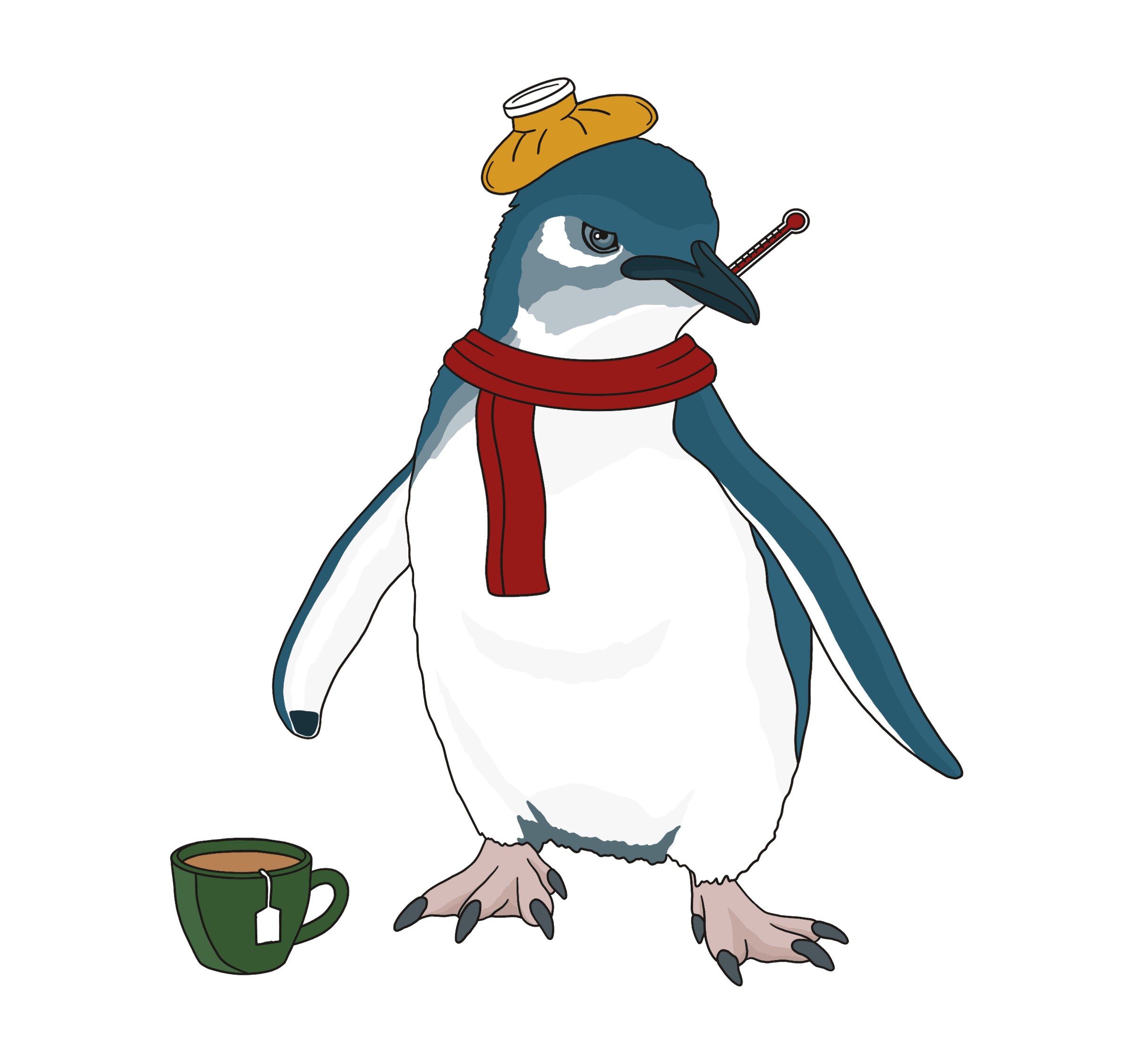
Healthy Kororā typically spend their days out at sea and hide when on land. They are a cryptic species and don’t like to be seen. If you spot a Little Blue Penguin out in the open and exposed during the daytime, it likely needs your help.
Common signs that Kororā need rescuing include:
Difficulty standing or walking and not wanting to move.
Not trying to escape from people and dogs.
Obvious signs of injury (e.g. open wound, presence of blood or other fluids).
Lying face down, often with eyes semi-closed or pupils dilated.
Paddling around in shallow water and struggling to swim.
Looking scruffy or brown, potentially with loose feathers.
Call 0800 SICK PENGUIN (0800 742 573) if you find a sick or injured Kororā and follow the Important First Steps at the top of this page.
Seasonal kororā trends and causes of injury
We experience an increase in Kororā rescues between October and April each year.
Often these rescues involve starving penguins, especially if there is a lack of food due to warmer ocean temperatures or ocean conditions are challenging (e.g. murky water after storm events). Young fledglings that have recently left their burrows may struggle to find food and also wash ashore during this time of year.
From January to April, we also often receive calls about Kororā moulting. Kororā replace all of their feathers at once and need to stay on land for 2-3 weeks. Their feathers start turning brown during this time period. A healthy Kororā will moult hidden away and NOT out in the open. If you find a moulting Kororā out in the open, it needs rescuing as it will likely be underweight and unable to finish the moult without help.
However, injured and sick Kororā may be found throughout the year. Common causes of injury throughout the year include:
Being struck by boats or other watercraft.
Entanglement in fishing nets, discarded fishing line, and rope.
Attacks by introduced predators and dogs.
Call 0800 SICK PENGUIN (0800 742 573) if you find a sick or injured Kororā.
What happens after the rescue?
Kororā (and other seabirds) require special care, as their lifestyles and diets are very different from land-based birds, and common treatments that help other birds may make them sicker.
Our trained first-response team will handle and transport Kororā safely to be assessed by our trained rehab team in collaboration with ARRC Wildlife Trust. WBWT holds a permit to rescue and hold Kororā.
Outcomes are determined via professional diagnosis and appropriate treatment. Euthanasia is often the kindest and most ethical option for the individual case at hand.
Always remember: Without rescue, sick, injured and starving Kororā will most likely die and are at serious risk of predation & dog attacks. Rescue and good first response means giving them a chance.
Suspect a dog attack?
Dogs are possibly the biggest threat to Kororā, and dog bites/attacks are generally fatal for Kororā if left untreated.
Sadly, most dog attacks in Aotearoa New Zealand are left unreported.
If you suspect a Kororā has been attacked by a dog, please report it to DOC and your local council immediately, as more Kororā could be at risk of attack in the same area.
HPAI - often referred to as Bird Flu
Highly Pathogenic Avian Influenza (HPAI) is a highly contagious disease that has caused severe decline in bird populations globally. HPAI can infect people (= zoonotic disease), although it is rare.
If you find 3 or more wild birds that are sick or dead in the same place, please do not touch them - and report it to MPI's Biosecurity Hotline: 0800 80 99 66. MPI will advise on the next steps.
More information is available from MPI here and from DOC here.
***Disclaimer: At the time of this content update [August 2026], three cases of HPAI have been confirmed on New Zealand’s mainland, and the official advice is to be alert and use good habits to limit the impact of bird flu. WBWT does not take any responsibility for your actions - it is your responsibility to inform yourself about the current situation.
Thank you for helping to protect our kororā!
Spotted a dead penguin? Find out more here:
Our Supporters